The Great Wildebeest Migration
Follow one of nature’s greatest wildlife spectacles across the Serengeti, from the newborn calves of Ndutu to the dramatic Mara River crossings in northern Tanzania.
One Of Nature’s Greatest Journeys
A Wildlife Spectacle Across The Serengeti
The Great Wildebeest Migration is one of the most remarkable natural events on Earth. Each year, more than 1.5 million wildebeest, together with hundreds of thousands of zebras and other grazing animals, move through the Serengeti ecosystem in search of fresh grass and water.
This seasonal journey covers approximately 800 kilometres across Tanzania’s Serengeti and, for some herds, Kenya’s Maasai Mara. The movement is shaped by rainfall and grazing conditions, so the herds do not follow a fixed timetable or a single route.
At Gladys Adventure & Safaris, we help you choose the most suitable safari area for your travel dates, whether you hope to see the calving season in Ndutu, follow the herds across the plains, or look for the famous Mara River crossings in the north.
Plan Your Migration Safari Request a Quote
Understanding The Migration
Why Do The Herds Keep Moving?
The migration is a continuous search for food and water. Seasonal rains bring fresh grass to different parts of the ecosystem, encouraging the herds to move as conditions change.
Following The Rains
Rainfall determines where fresh grass grows. Because the rains vary each year, the herds’ routes and arrival dates can change too.
Fresh Grazing
Wildebeest, zebras and gazelles feed in different ways and on different parts of the grassland, helping them share the same habitat.
Survival In The Wild
Newborn calves, travelling herds and river crossings create opportunities for predators, making the migration a powerful story of survival.
Migration Calendar
Where To Find The Migration By Month
These are typical seasonal patterns, not guaranteed dates. Herd movements depend on rainfall, grass availability and conditions in the Serengeti ecosystem.
December – March: Ndutu Calving Season
Large herds gather on the nutrient-rich grasslands of Ndutu and the southern Serengeti. Zebras commonly give birth around December and January, while wildebeest calving peaks from late January into February and early March.
Best for: Newborn calves, large herds, and predator activity. Suggested area: Ndutu and the southern Serengeti.
April: The Northward Movement Begins
As the long rains arrive, herds begin spreading out and moving north and west in search of fresh grazing. Rain can make roads muddy and wildlife viewing conditions more challenging.
Best for: Green landscapes and moving herds. Suggested area: Central Serengeti, with routes adjusted to current sightings.
May – June: Western Corridor
Many herds move through the central and western Serengeti. Some cross the Grumeti and Mbalageti river systems, although the timing and scale of crossings vary from year to year.
Best for: Travelling herds and possible river crossings. Suggested area: Central Serengeti and the Western Corridor.
July – October: Northern Serengeti
The herds move towards the Mara River and the northern grazing grounds. River crossings can be dramatic, but they are unpredictable; herds may wait at the banks for hours or days, and not every group crosses.
Best for: The possibility of Mara River crossings. Suggested area: Kogatende and the Lamai Triangle in northern Serengeti.
October – November: Moving South
As conditions change in the north, many herds begin moving south and east towards new grazing areas. The migration is spread across different routes, so sightings depend on recent rainfall and herd location.
Best for: Following the return movement. Suggested area: Lobo and central Serengeti, depending on current conditions.
December: Back To The Southern Plains
Many herds return to the southern Serengeti and Ndutu, where fresh grass supports the next stage of the annual cycle and the approach of calving season.
Best for: Green plains and large grazing herds. Suggested area: Ndutu and the southern Serengeti.
Migration Timing Can Change
The Great Migration is a natural event, not a scheduled show. The locations above are general seasonal guides. We recommend planning your route around recent herd reports and allowing flexibility where possible. River crossings and specific wildlife sightings can never be guaranteed.
Migration Highlights
Choose Your Great Migration Experience
Each season offers a different perspective on this extraordinary wildlife journey.

Wildebeest Calving Season
Visit the southern plains to look for newborn wildebeest, grazing herds and predators active around the calving grounds.
Ndutu and Southern Serengeti

Western Corridor Journey
Follow the movement of the herds through the western Serengeti, with a chance of seeing crossings at the Grumeti river system.
Central Serengeti and Western Corridor

Mara River Crossings
Explore northern Serengeti, where herds may gather along the Mara River before attempting one of the migration’s most dramatic crossings.
Kogatende and Lamai Triangle
A Dramatic Moment In The Wild
The Challenge Of The Mara River
The Mara River crossings are famous for their scale and unpredictability. Herds may gather at the riverbank for hours or days before moving into the water together. Steep banks, currents, rocks, fatigue and Nile crocodiles make the crossing hazardous.
Not every wildebeest or zebra crosses the river. Many animals remain on the same side, while others cross more than once as they search for grazing. These events unfold naturally and cannot be predicted precisely.
The first crossings in the northern Serengeti can take place entirely within Tanzania. Some herds later move into Kenya’s Maasai Mara, while many remain in the Serengeti ecosystem.

Migration Map
Follow The Herds Month By Month
Browse the maps to see where the herds are typically found at different times of the year. The red dots show the general areas where the herds gather.
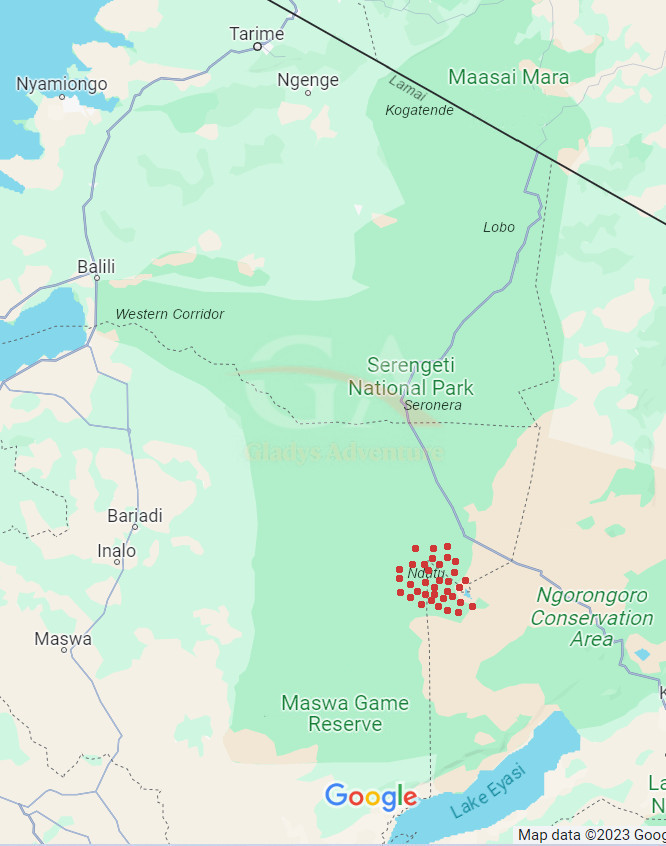
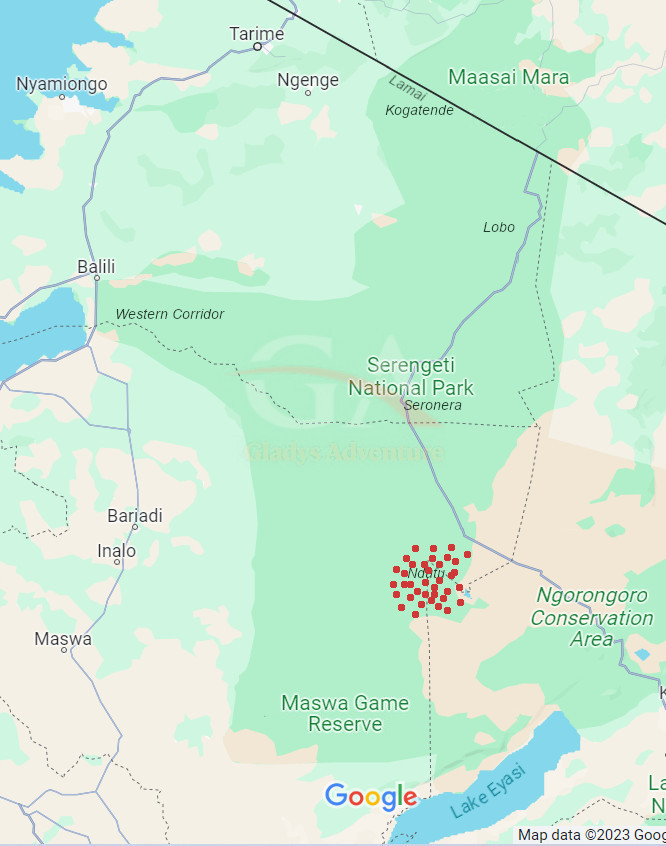
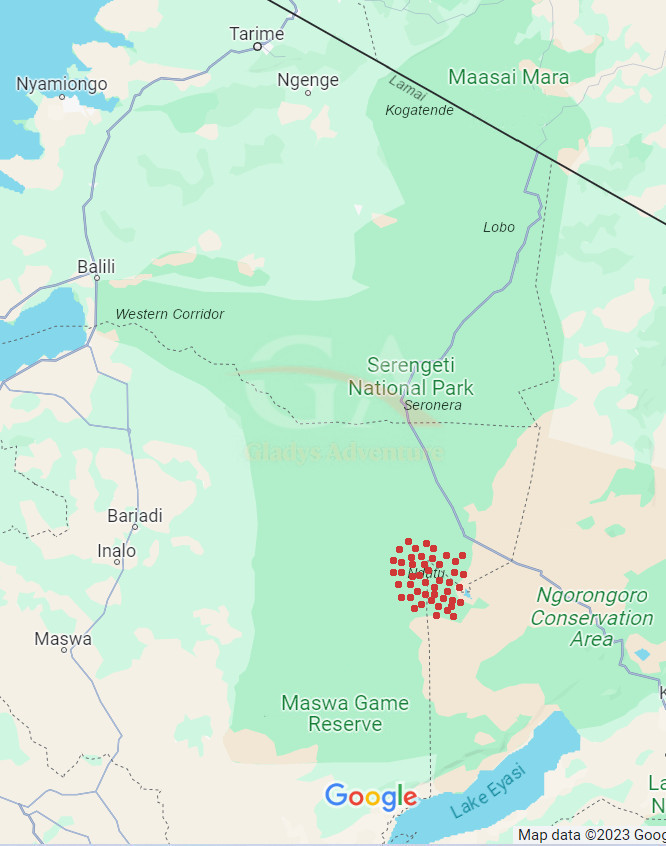
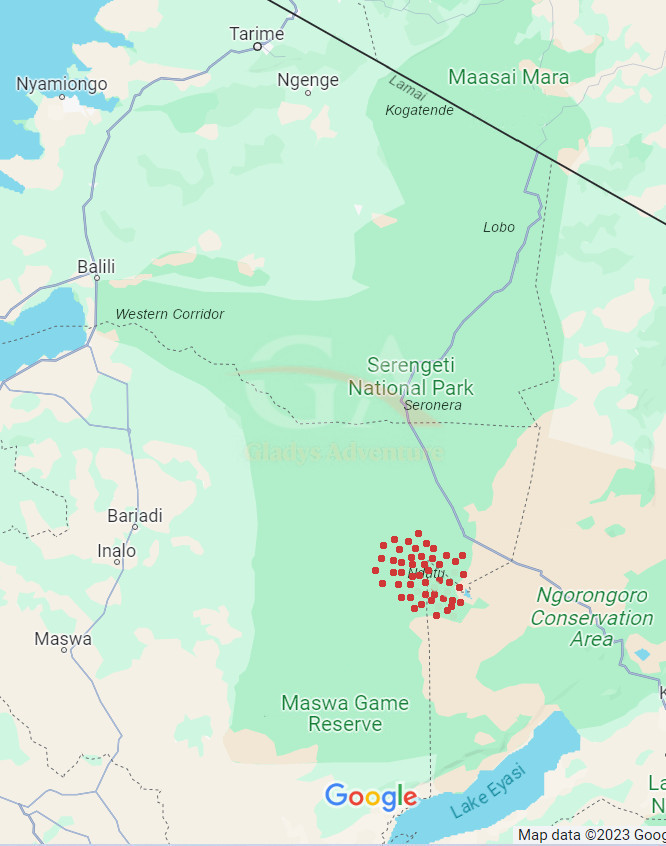
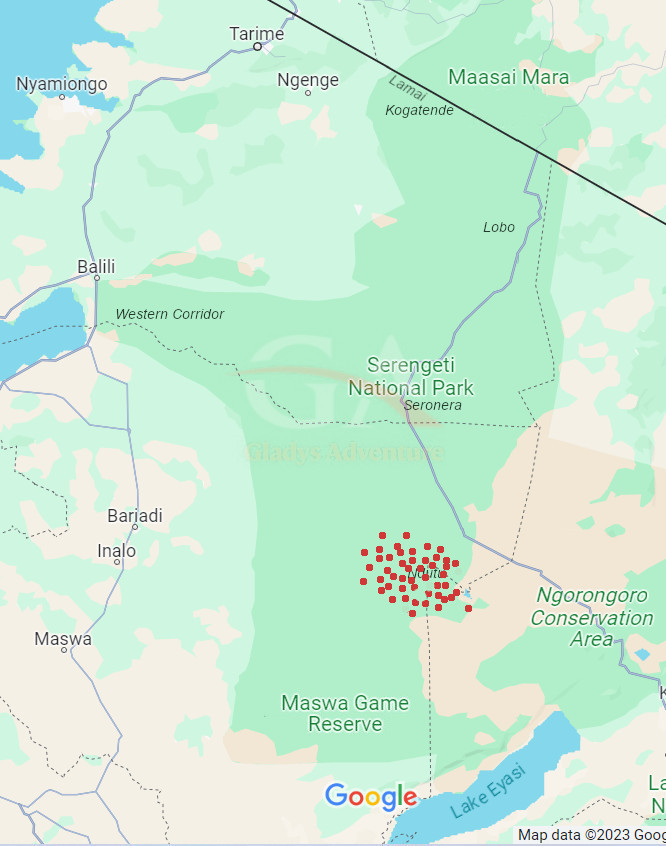
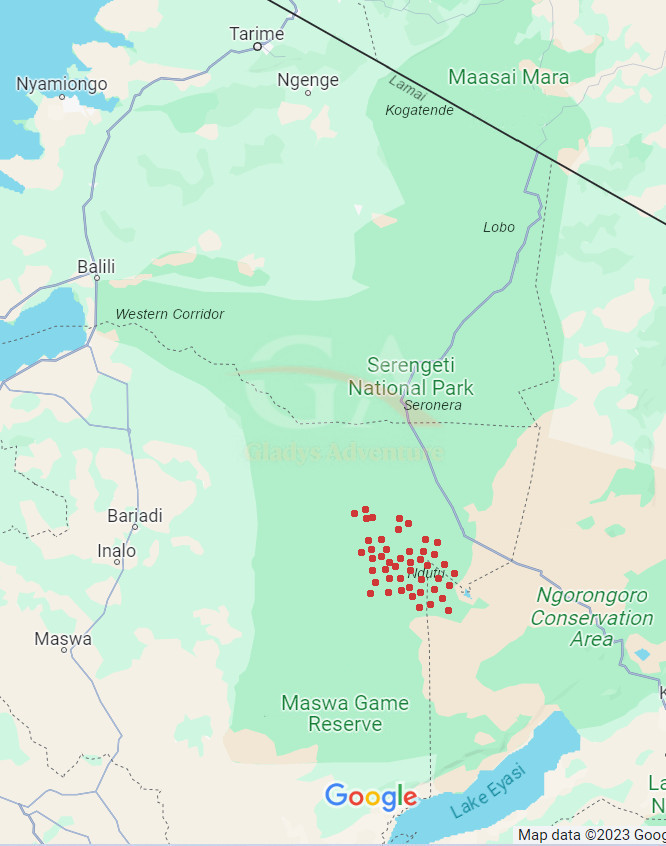
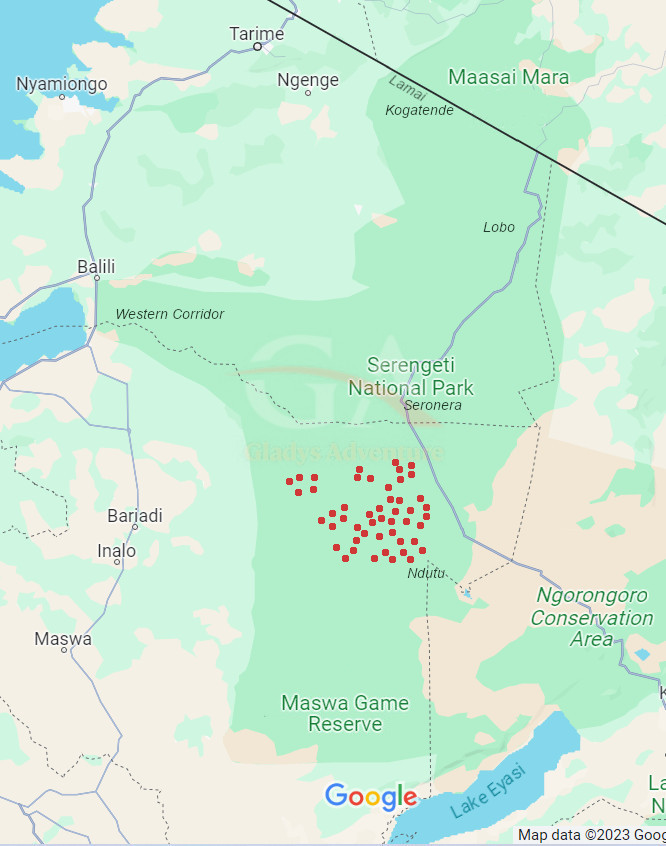
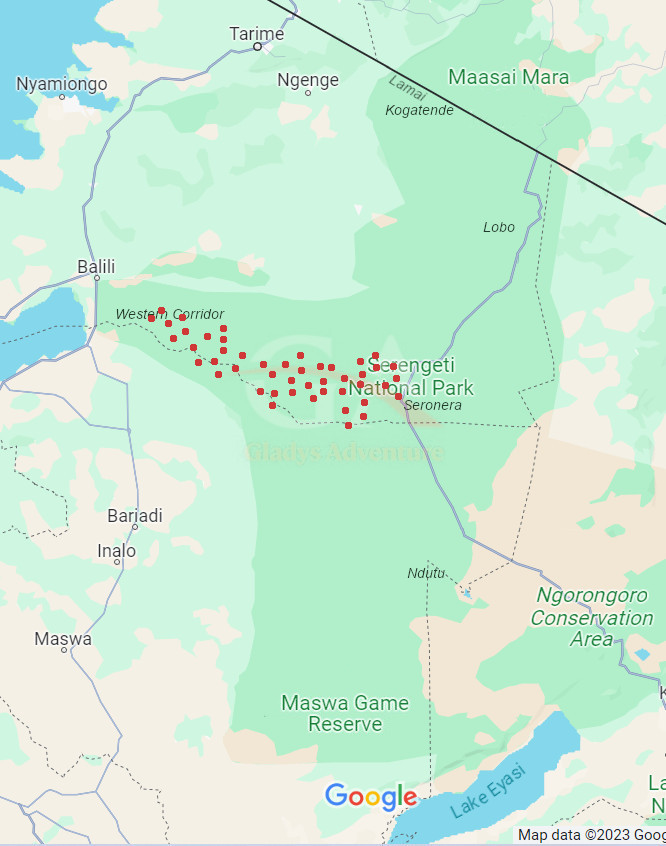
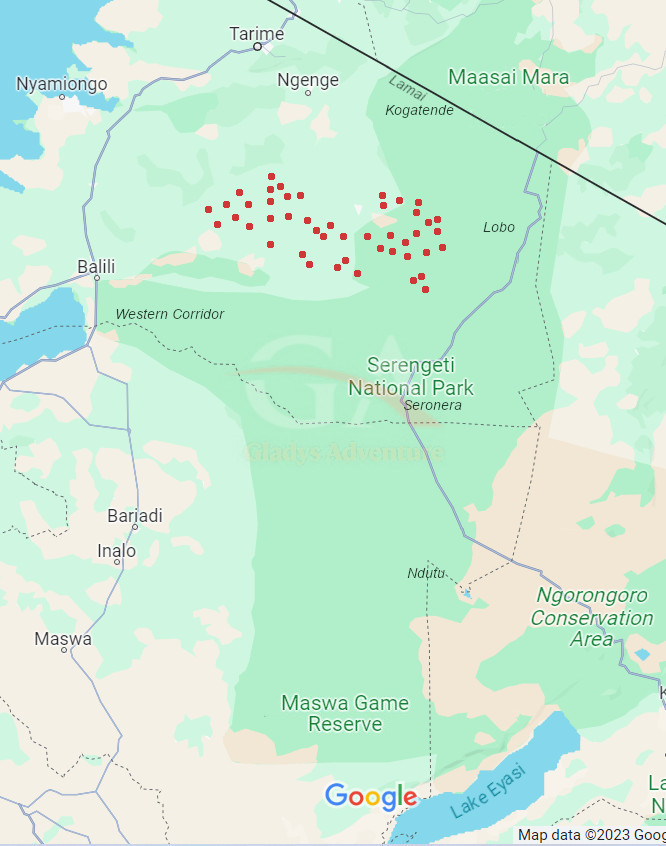
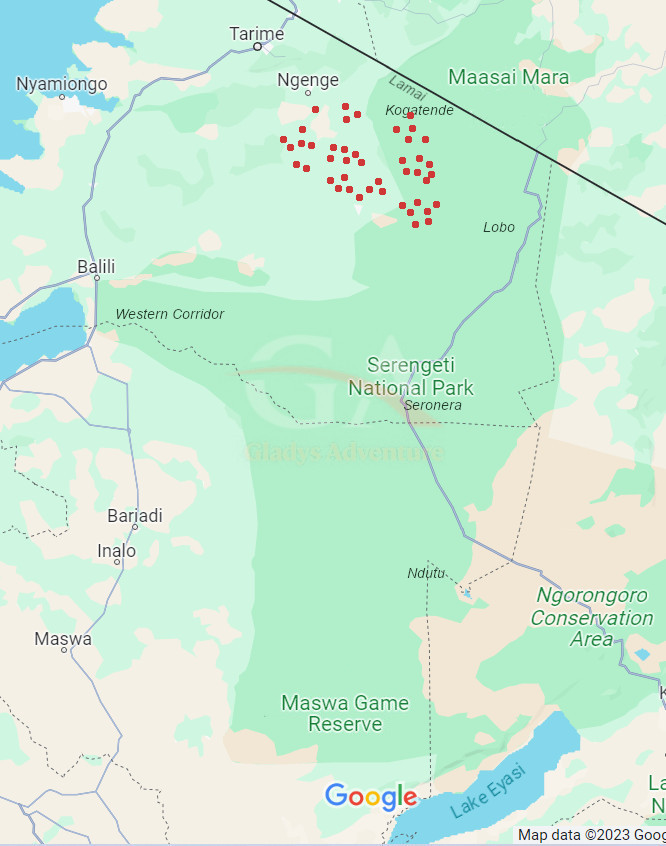
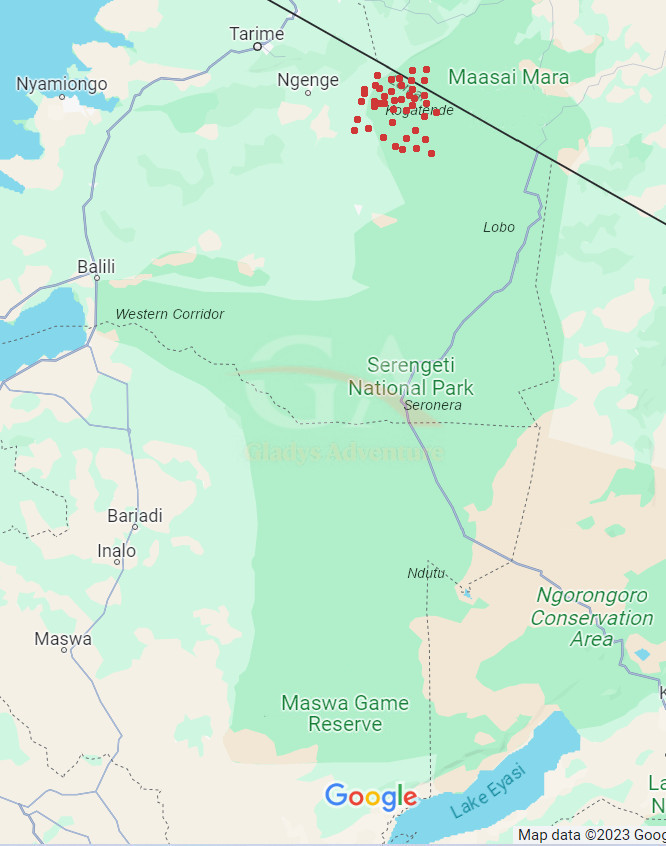
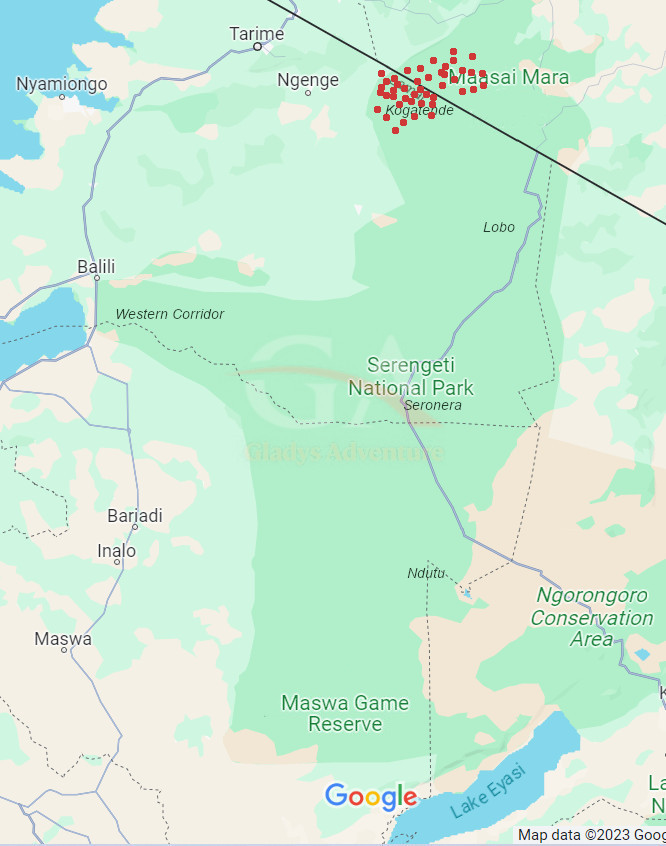
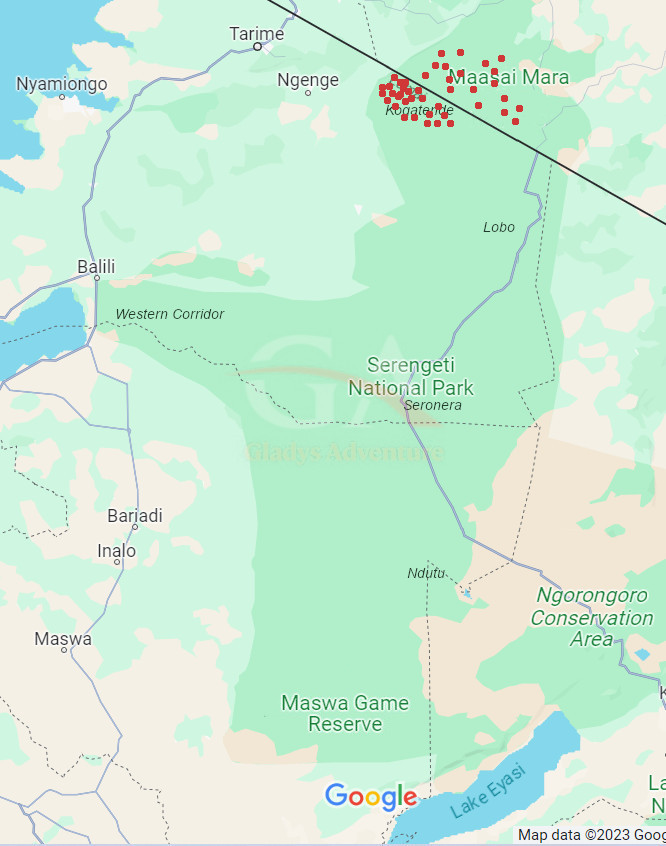
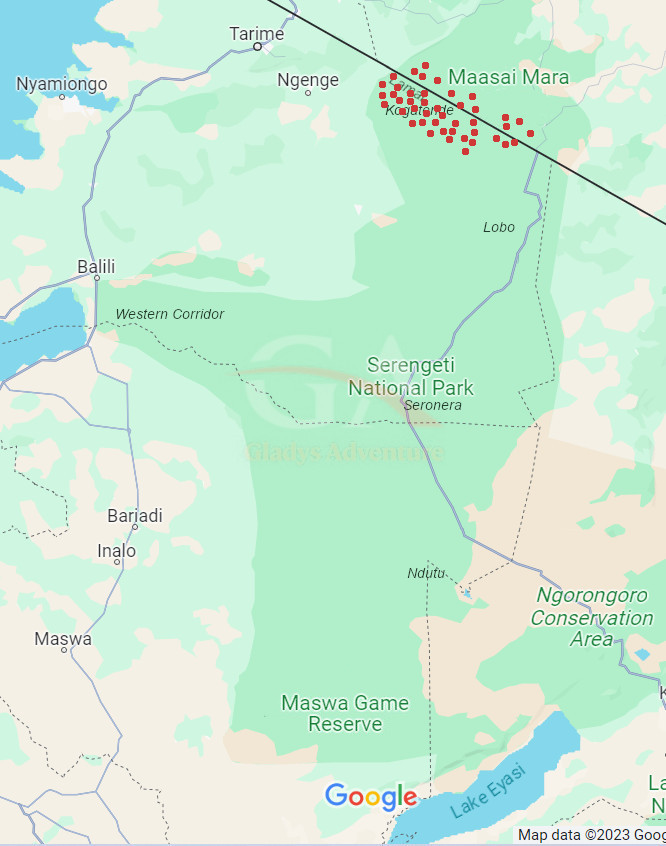
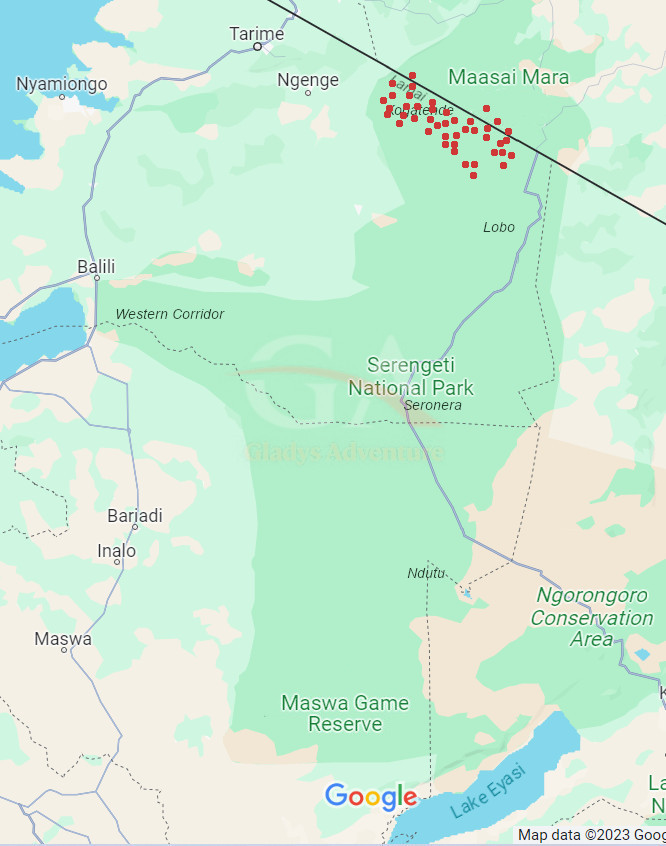
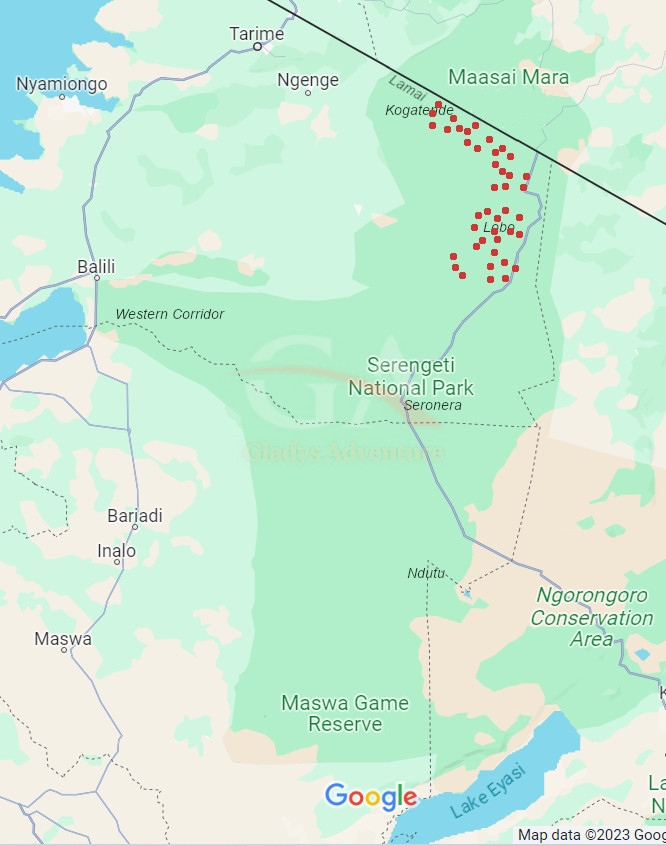
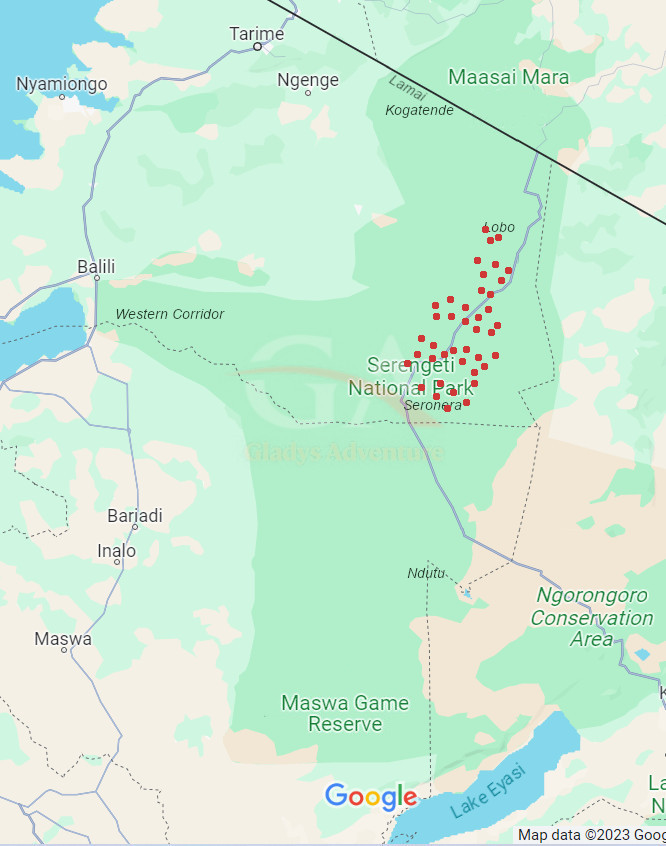
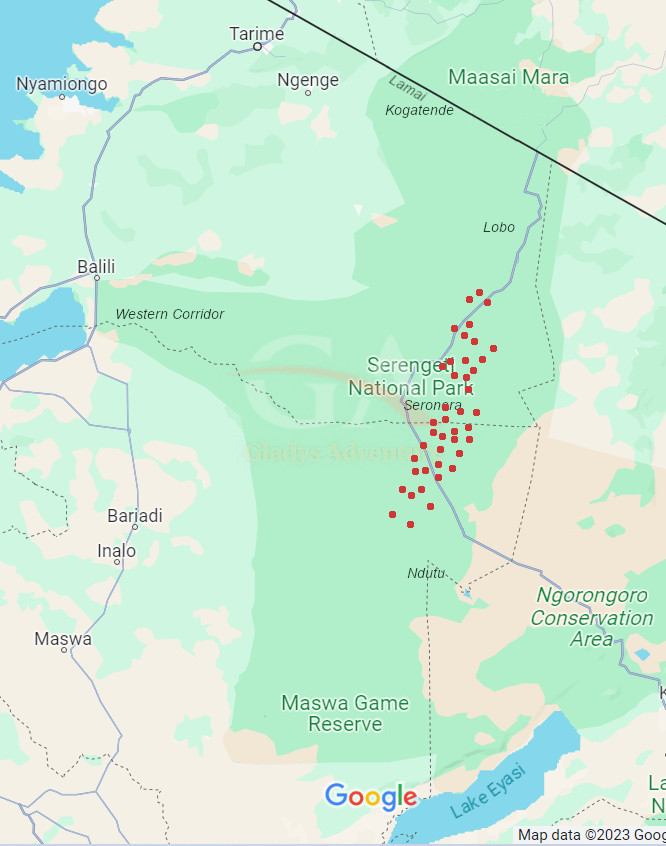
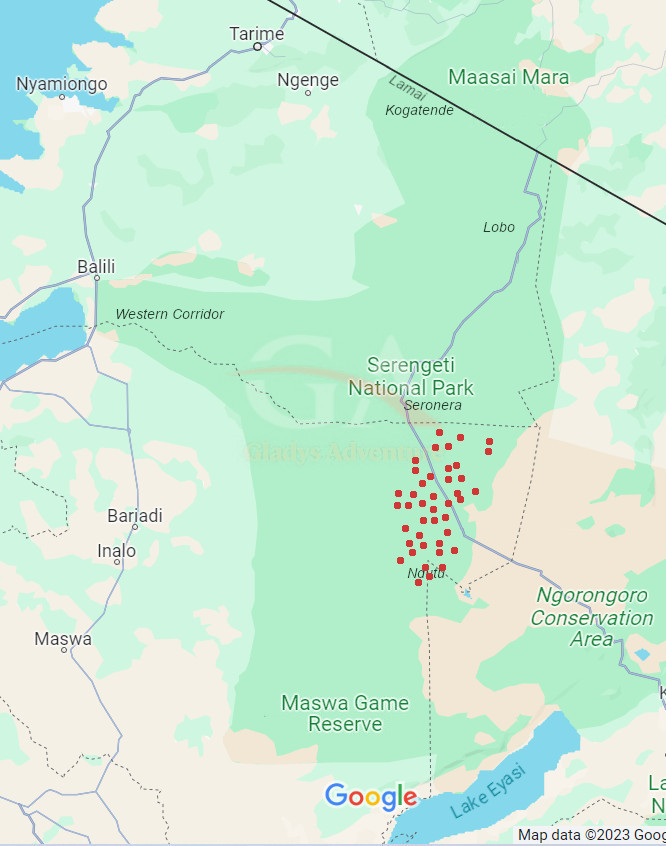
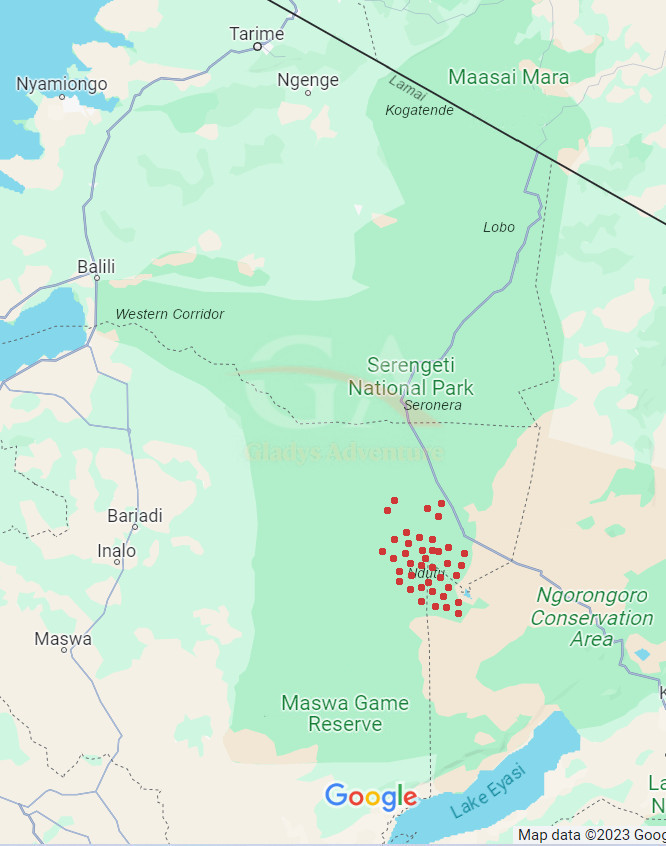
January
Ndutu and the southern plains
Large herds are typically spread across the southern plains around Ndutu, grazing on fresh short grass.
Mid January
Ndutu
The herds stay concentrated around Ndutu as calving season builds. Zebra foals are often already on the ground.
February
Ndutu
Peak calving period. The herds are typically packed around Ndutu, with thousands of newborn calves and predators close by.
Mid February
Ndutu
Calving continues around Ndutu, with large herds and active predators on the southern plains.
Early March
Ndutu
The herds are still concentrated in the south, though groups begin to spread out as the grass is grazed down.
Mid March
the southern plains
The herds start to disperse across the southern plains as the calving season winds down.
April
the southern and central Serengeti
As the long rains arrive, the herds spread out and begin drifting north and west across the plains.
Mid May
the Western Corridor
Many herds are travelling through the central and western Serengeti towards the Western Corridor.
Mid June
the western and north-central Serengeti
The herds are moving north through the western and north-central Serengeti, and some may cross rivers along the way.
July
the north-central Serengeti
The herds are spreading across the north-central Serengeti and approaching the Kogatende area.
Mid July
Kogatende
Large groups gather around Kogatende, close to the Mara River.
August
the Mara River region
The herds are in the Mara River region, with some groups moving between northern Serengeti and the Maasai Mara in Kenya.
Mid August
Kogatende and the Mara River
Kogatende and the Mara River remain the focus, with herds on both sides of the border.
Mid September
Kogatende and the Mara River
The herds are still around the Mara River and Kogatende, and river crossings remain possible.
October
Kogatende
Many herds are back in northern Serengeti around Kogatende as the dry season continues.
Mid October
Lamai and Lobo
The first herds begin heading south through the Lamai area and Lobo.
November
Lobo and the central Serengeti
The herds travel south through Lobo towards the central Serengeti as the short rains approach.
Mid November
Seronera and the central Serengeti
The herds stream through the central Serengeti around Seronera, heading south.
December
Seronera and Ndutu
The herds are reaching the southern Serengeti and moving towards Ndutu.
Mid December
Ndutu
The herds are back on the southern plains around Ndutu, ahead of the calving season.
These maps show typical patterns, not a live tracker. Herd positions change with the rains each year.
Plan A Safari For This Time Of YearWhere To Go
Best Areas For The Great Migration
Choosing the right region is just as important as choosing the right travel dates.
Ndutu & Southern Serengeti
Best known for the calving season and large herds on nutrient-rich grasslands from around December to March.
Central Serengeti
A valuable year-round wildlife area and a practical base for following herds during seasonal transitions.
Western Corridor
Offers opportunities to see travelling herds and possible Grumeti River crossings around May and June.
Kogatende
A popular northern Serengeti base for following herds near the Mara River during the middle and later months of the year.
Lamai Triangle
A remote northern area that can offer rewarding wildlife viewing when the herds move around the Mara River region.
Lobo & Northern Routes
Potentially good areas during the herds’ southward movement, depending on current rainfall and grazing conditions.
Plan With The Season
How To Plan Your Migration Safari
A well-planned Great Migration safari starts with your preferred travel dates and the wildlife experience you want to see. Calving season and river-crossing season usually require different routes and accommodation locations.
For the best chance of finding the herds, we recommend selecting accommodation near the likely migration area and checking recent reports before travelling. Longer itineraries can offer more flexibility if the animals move away from one location.
Our team can help you choose a route, accommodation style and safari duration to suit your interests and budget.
When You Contact Us, Tell Us:
- Your planned travel dates
- How many people are travelling
- Whether you prefer calving season or river crossings
- Your preferred accommodation level
- Your ideal safari length and budget
Travel With Gladys Adventure
Your Great Migration Safari, Thoughtfully Planned
Season-Led Planning
We help match your travel dates with the regions that are typically best for your preferred migration experience.
Local Safari Support
Plan your journey with a Tanzania-based team familiar with Northern Tanzania safari travel.
Flexible Itineraries
Choose the route, length and accommodation style that fit your interests and budget.