Health & Safety in Tanzania
At Gladys Adventure & Safaris, your health, safety and well-being are our priorities. Whether you are climbing Mount Kilimanjaro, exploring Mount Meru, enjoying a wildlife safari or discovering Tanzania's beautiful landscapes, we encourage every traveler to prepare properly and understand the health and safety considerations of their journey.
From medical preparation and travel insurance to mountain health monitoring and emergency evacuation arrangements, we aim to help you travel with confidence while respecting the challenges of Tanzania's natural environment.
1. Travel & Medical Insurance
We strongly recommend obtaining comprehensive travel insurance before arriving in Tanzania. Your policy should cover:
- Medical treatment and hospitalization in Tanzania.
- Emergency medical evacuation, including air ambulance where necessary.
- Repatriation to your home country.
- Repatriation of remains, where applicable.
- The specific activities you plan to undertake, including high-altitude trekking and mountain climbing.
Read your policy carefully and check exclusions, coverage limits and any requirements for high-altitude activities. For a Kilimanjaro trek, confirm that your policy covers emergency evacuation from the mountain.
Zanzibar travel insurance: The original guidance provided for this page states that Zanzibar introduced separate mandatory inbound travel insurance for tourists in October 2024, at a fee of USD 44. Please verify the current requirements, price and purchasing procedure with the official Zanzibar authorities before publishing this information.
2. COVID-19 & General Travel Advice
Entry requirements and public health regulations can change. Before departure, check the latest official guidance for mainland Tanzania and Zanzibar, including any applicable health documentation or entry requirements.
We recommend that travelers:
- Monitor official travel advisories before and during their trip.
- Follow instructions issued by local authorities.
- Prepare for possible changes to travel arrangements.
- Consider how access to medical services may be affected during a public health emergency.
Private healthcare facilities are available in some parts of Tanzania, but capacity and access to specialized treatment may be limited, particularly outside major urban centers.
3. Vaccinations & Travel Health Preparation
Consult a qualified travel-health professional at least eight weeks before departure to discuss recommended vaccinations, preventive medication and other health precautions relevant to your itinerary.
Your travel-health consultation should take into account your destinations, planned activities, medical history and current vaccination status.
Yellow Fever
Yellow fever vaccination requirements depend on your travel itinerary and the countries you have visited or transited through.
Travelers arriving from, or in certain cases transiting through, countries with a risk of yellow fever transmission may be required to present a valid yellow fever vaccination certificate.
Check the latest official entry requirements before traveling.
4. Medical Care in Tanzania
Medical facilities and specialist services vary considerably across Tanzania. Access to advanced treatment may be limited in remote safari destinations and mountain regions.
Some private medical facilities and safari lodges provide medical services or emergency assistance. However, treatment options depend on the location and the nature of the medical emergency.
In cases of serious illness or injury, evacuation to a better-equipped medical facility may be necessary.
For your protection, ensure that your travel insurance covers emergency medical treatment and evacuation.
For Mount Kilimanjaro and Mount Meru expeditions, our guides monitor trekkers throughout the journey and respond to health concerns in accordance with their training and the circumstances.
5. Medication & Personal Medical Supplies
Bring sufficient supplies of any prescribed medication for the entire trip, including a reasonable allowance for unexpected delays.
We recommend that you:
- Keep medication in its original packaging where practical.
- Carry copies of prescriptions and relevant medical information.
- Consult your doctor about managing existing medical conditions during travel and high-altitude activities.
- Discuss altitude-related medication, including acetazolamide (Diamox), with a qualified healthcare professional before your trek.
Although some medicines may be available in local pharmacies, availability, formulation and suitability can vary. Do not rely on purchasing essential prescription medication after arrival.
Please inform our team before your trek about relevant medical conditions, allergies and medications so that appropriate precautions can be considered.
6. Malaria Prevention
Malaria is transmitted through the bites of infected female Anopheles mosquitoes. The risk varies by location and season, and preventive measures are important when visiting affected areas.
Rainier periods can increase mosquito activity in some areas of Tanzania. Travelers should seek destination-specific advice from a qualified travel-health professional before departure.
How to Reduce Your Risk
- Use an appropriate insect repellent on exposed skin.
- Wear long-sleeved shirts and long trousers, particularly in the evening.
- Sleep in properly screened accommodation or under a mosquito net where necessary.
- Follow professional advice on malaria-prevention medication.
- Seek prompt medical assessment if you develop a fever or other possible malaria symptoms during or after your trip.
Symptoms may appear after you have returned home. Always tell your healthcare provider about your travel history if you become unwell following a visit to Tanzania.
Important: Do not start, stop or change antimalarial medication based solely on general website advice. Discuss your itinerary and medication plan with a qualified healthcare professional, particularly before a high-altitude trek.
7. Safe Drinking Water
Water quality can vary across Tanzania, and consuming contaminated water may cause waterborne illness.
To reduce the risk:
- Drink bottled, purified or appropriately treated water.
- Avoid drinking untreated tap water.
- Use safe water for brushing your teeth when water quality is uncertain.
- Maintain good hand hygiene and follow food-safety precautions.
Gladys Adventure & Safaris provides treated drinking water on its safaris and mountain treks. Travelers should confirm any specific arrangements with our team before departure.
8. Mountain Safety: Kilimanjaro & Meru
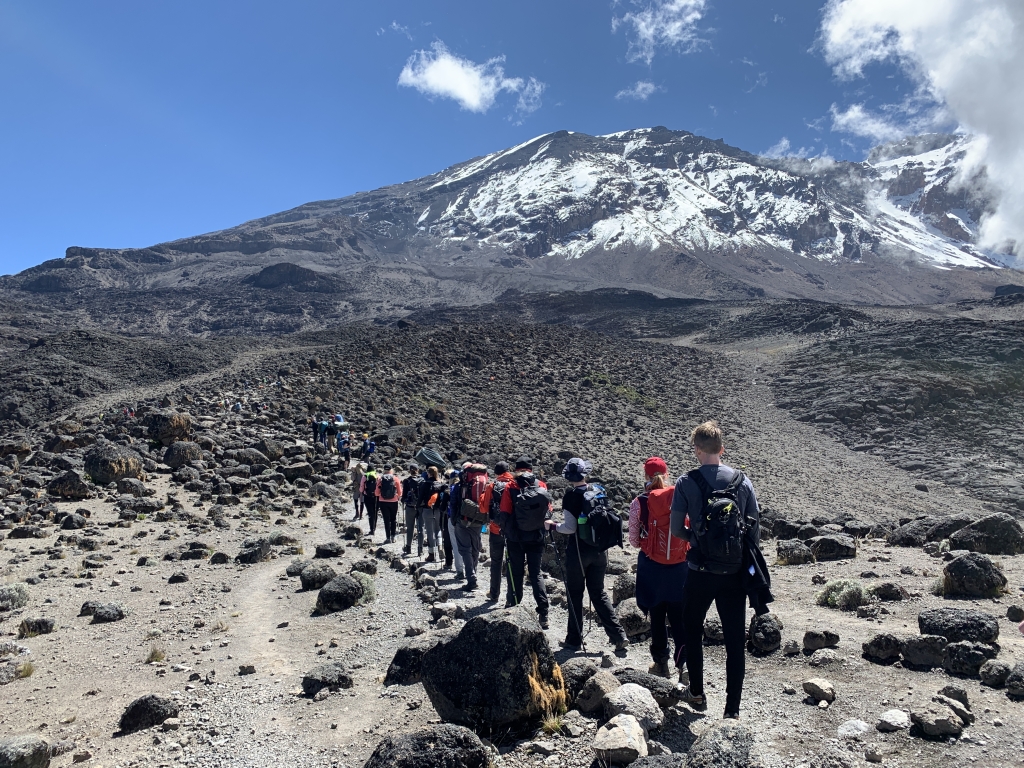
Mount Kilimanjaro reaches 5,895 metres (19,341 feet) above sea level. Although the standard trekking routes do not generally require technical climbing skills, the mountain presents significant physical and medical challenges.
At high altitude, the amount of oxygen available with each breath is lower than at sea level. The body needs time to adapt, and ascending too quickly can lead to altitude-related illness.
Physical fitness alone does not guarantee successful acclimatization. Even experienced athletes can develop altitude sickness.
Our Approach to Mountain Safety
At Gladys Adventure & Safaris, we emphasize preparation, communication and regular health monitoring throughout the trek.
Our safety practices include:
- Health assessments and monitoring during the climb.
- Observation for signs of altitude-related illness.
- Guidance on hydration, nutrition, rest and acclimatization.
- Daily briefings about the route, expected conditions and equipment.
- Experienced guides trained to recognize potential health concerns.
- Prompt action when a trekker's condition raises safety concerns.
Our guides monitor relevant vital signs, which may include pulse, respiratory rate, blood oxygen saturation, blood pressure and temperature, according to the trek's procedures and circumstances.
Tell Your Guide About Your Health
Before the trek, disclose relevant medical conditions, allergies and medications. During the climb, report headaches, nausea, vomiting, dizziness, unusual fatigue, breathing difficulties or any other symptoms promptly.
Do not conceal symptoms because you want to reach the summit. Your guide needs accurate information to make appropriate safety decisions.
Our goal is not to get everyone to the summit at any cost. Our goal is to prioritize safety and help every trekker achieve the highest reasonable level of success without compromising their well-being.
Altitude Sickness & Diamox
Acute Mountain Sickness (AMS) can affect people at high altitude regardless of their fitness or previous climbing experience. Symptoms can include headache, nausea, dizziness, fatigue and loss of appetite. Severe altitude-related illness can become life-threatening.
Acetazolamide (Diamox) may be recommended for some travelers to help prevent or manage altitude-related problems, but it is not suitable for everyone and does not replace gradual ascent or appropriate responses to symptoms.
Discuss its benefits, risks, dosage and timing with a qualified healthcare professional before your climb. Never use medication to justify continuing an ascent when symptoms suggest that it may be unsafe.
If serious altitude-related illness is suspected, prompt assessment and descent when indicated are essential.
9. First Aid & Emergency Equipment
Our mountain expeditions carry a well-stocked first-aid kit. We also encourage trekkers to bring a small personal medical kit containing items suitable for their individual needs, such as blister care, sun protection, insect repellent and appropriate remedies for minor discomfort.
The equipment and procedures used during an emergency depend on the nature of the incident, the location and the available resources.
Emergency Oxygen
Emergency oxygen is available on Gladys Adventure & Safaris climbs. It may be used when indicated by trained personnel as part of an emergency response.
Oxygen is an important support measure, but it does not replace descent, medical assessment or evacuation when required.
Helicopter Rescue & Medical Evacuation
In certain emergencies, helicopter evacuation may be possible from Mount Kilimanjaro, subject to weather, landing conditions, location and operational availability.
Kilimedair provides mountain evacuation and related services. Travelers should confirm the current availability of these services and ensure that their insurance covers the intended activity and evacuation arrangements.
Visit Kilimedair for service information.
Mountain Stretchers
Mountain rescue stretchers can assist in moving injured or unwell trekkers when evacuation is required. The appropriate method depends on terrain, the trekker's condition and available rescue resources.
Gladys Adventure & Safaris can arrange portable stretchers for its climbs upon request. These may be used by trained staff to assist with moving a trekker to a safer location or suitable evacuation point.
Please discuss any specific evacuation requirements with our team before your expedition.
Gamow Bag
A Gamow bag is a portable hyperbaric chamber designed to temporarily simulate a lower altitude for a person suffering from certain altitude-related conditions.
It may be useful in specific circumstances when descent is delayed, but it is not a substitute for descent and appropriate medical care.
The original company information states that a Gamow bag is available as an optional add-on for USD 300 rather than as standard equipment. Please confirm current availability, pricing and suitability with our team before booking.
10. Experienced Guides & Professional Mountain Support
The knowledge and experience of mountain guides, cooks and porters play an important role in the trekking experience.
Our team works to support trekkers through careful preparation, route guidance, regular health monitoring, appropriate